Cash value life insurance is a type of permanent life insurance that provides a death benefit while building cash value over time. Unlike term life insurance, which provides coverage for a specific period, permanent policies can provide lifelong coverage as long as you meet the policy requirements and keep the policy in force.
Knowing more about cash value, its advantages, disadvantages and availability will help you determine if this kind of policy is right for you.
What Is Cash Value Life Insurance?
Cash value life insurance is a type of permanent life insurance that has a savings or accumulation element. The premium covers some of the insurance expenses and a part of it goes towards cash value. The cash value can build up on a tax-deferred basis, depending on the policy.

How Does Life Insurance Cash Value Work?
Life insurance cash value uses a portion of the premium for the cash value of the policy. The way it grows depends on the type of policy. Growth is guaranteed with a whole life policy, and with a universal and variable policy, growth may be linked to the investment’s performance or the interest rate.
How Does a Cash Value Life Insurance Policy Build Value?
A cash value life insurance policy usually builds value gradually. Early premiums may cover more insurance costs and fees, so accumulation can be slower at first.
Growth can depend on:
- Premium payments
- Policy fees
- Interest or investment performance
- Policy type
- Withdrawals and loans
- Dividends, where applicable
What Types of Permanent Life Insurance Have Cash Value?
Several types of permanent life insurance can build cash value:
- Whole life: Provides guaranteed cash value growth based on policy terms.
- Universal life: Offers greater flexibility in premiums and benefits.
- Variable life: Allows cash value to be invested in separate accounts.
- Indexed universal life: Growth is linked partly to a market index, subject to policy terms.
Each option has different costs, risks, and guarantees.
What Are the Benefits of Life Insurance With Cash Value?
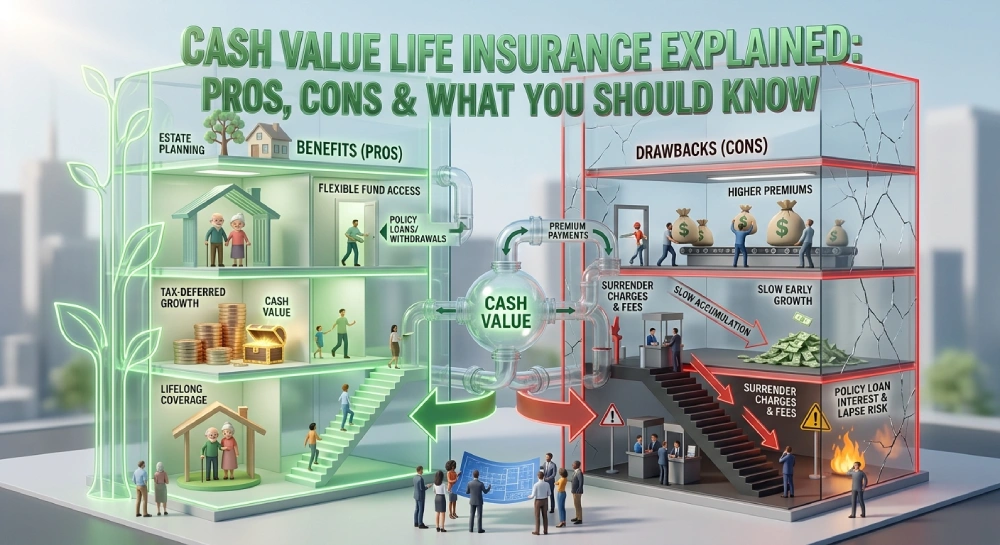
Life insurance with cash value can provide permanent coverage while building an asset that may be accessed during your lifetime.
Potential benefits include:
- Lifelong coverage
- Tax-deferred cash value growth
- Access through loans or withdrawals
- Financial planning flexibility
- Potential estate planning benefits
What Are the Disadvantages of Cash Value Life Insurance?
These policies generally cost more than term life insurance and can have complicated fees and conditions.
Potential drawbacks include:
- Higher premiums
- Slow early cash value growth
- Surrender charges
- Policy loan interest
- Reduced benefits after certain withdrawals
- Possible tax consequences
Always review the policy’s actual costs before purchasing.
How Can You Access Cash Value From a Whole Life Policy?
The whole life policy cash value can generally be accessed through policy loans or withdrawals, depending on the policy terms. Withdrawals may reduce the cash value and death benefit, while policy loans accrue interest. If a loan remains unpaid, it can reduce the death benefit or cause the policy to lapse under certain circumstances.
How to Read a Whole Life Insurance Cash Value Chart
A whole life insurance cash value chart may show the policy’s cash value, death benefit, premiums, guaranteed values, and projected non-guaranteed values over time.
Pay attention to:
- Total premiums paid
- Guaranteed cash value
- Non-guaranteed values
- Death benefit
- Policy year
- Loan values
Assumptions are not always anticipated, so look at them closely.
Is Cash Value Life Insurance Worth It?
The decision of whether to opt for a value life insurance or not depends on your coverage needs, budget, and financial objectives. It might be appropriate for a person looking to have permanent coverage and who can afford to stick with the policy for numerous years. For the most part, if the focus is on temporary protection, term insurance might be more suitable.
What Should You Look for in a Cash Value Life Insurance Policy?
Compare the policy’s costs and guarantees rather than focusing only on projected growth.
Review:
- Premium requirements
- Guaranteed cash value
- Death benefit
- Fees and charges
- Surrender period
- Loan terms
- Dividend or investment assumptions
Conclusion
Cash value life insurance can offer permanent coverage along with value that can be utilized during the policyholder’s life. But it comes with premiums and complicated terms and conditions, so it’s definitely not for everybody. Check the options, the access, the growth, guarantees, and costs before selecting a policy.
Frequently Asked Questions
What is cash value life insurance?
It is permanent life insurance that provides a death benefit while building cash value that may grow over time and potentially be accessed during the policyholder’s lifetime.
How does value life insurance work?
Part of the premium supports insurance coverage while another portion contributes to cash value. Growth depends on the policy type and its terms.
What types of life insurance have cash value?
Whole life, universal life, variable life, and indexed universal life can include cash value. Their costs, risks, and growth methods differ.
Is whole life insurance the same as cash value life insurance?
Whole life insurance is one type of cash value life insurance. Other permanent policies, including universal life, can also build cash value.
How does whole life insurance cash value grow?
Whole life cash value generally grows according to a guaranteed schedule. Some policies may also receive dividends, although dividends are not guaranteed.
Can you withdraw money from life insurance cash value?
Many policies allow withdrawals, but they can reduce the cash value or death benefit and may have tax consequences depending on the circumstances.
Can you borrow against a cash value life insurance policy?
Many policies allow loans against available cash value. Interest applies, and an unpaid loan can reduce benefits or affect the policy.
What happens to the cash value when you die?
Generally, beneficiaries receive the policy’s death benefit rather than the cash value separately. The exact treatment depends on the policy terms.
Is cash value life insurance worth it?
It can be worthwhile for people seeking permanent coverage and long-term financial planning options. It may be less suitable for those seeking inexpensive temporary coverage.
What should you look for in a value life insurance policy?
Compare premiums, guarantees, fees, cash value growth, death benefits, surrender charges, and loan terms before choosing a policy.